GroundHog™ Radish

Nitrogen Mining & Nutrient Scavenging
Weed Suppression
Aerates Ground and Alleviates Soil Compaction
Promotes Water Infiltration
Pilot Hole Root Penetration
Reduction of Tillage & Chemical use
May Provide Nematode Control
Description
GroundHog™ Brand radish produces more root mass than oil seed radish or mustards. This extra large root system allows GroungHog™ to pull nitrogen and nutrients deep within the soil and bring them back to the surface. According to University of Maryland soil scientist, Ray Weil, a radish cover crop will capture 150 to 200 pounds of nitrogen per acre before winter killing. Upon decomposition, the nitrogen uptake becomes available to the next cash crop. GroundHog™ Brand radish will scavenge other nutrients as well.
GroundHog™ Brand radish has 2-4 times the amount of roots as rye or rape. (at 10"-20") Upon decomposition, these roots leave large holes in the ground that improve water infiltration and soil aeration.
Other Info
Applications:
Use as a cover crop to "mine" nitrogen and other nutrients that normally would leach out of your soils. GroundHog™ can also be used for weed suppression. When planted in August, radish cover crops emerged at the same time as the weeds but grow rapidly forming a closed canopy by the beginning of October, a month before spring oat and fall rye cover crops. During the winter, radish will decompose leaving a thin film of residue covering the soil.
Sowing and Establishment:
Seed from August - September (earlier in the north and later in the south) at 10-12lbs per acre. Broadcasted, or 1/4 inch deep if drilled. Aerial seeding into soybeans before leaf drop. Apply 60 units of N for best root growth potential. GroundHog™ doesn't like wet spots and will winter kill with temperatures in the teens.
GroundHog™ can be planted with other brassicas, clovers and grasses. As with all brassica crops, GroundHog™ should be use in a rotation with other species.
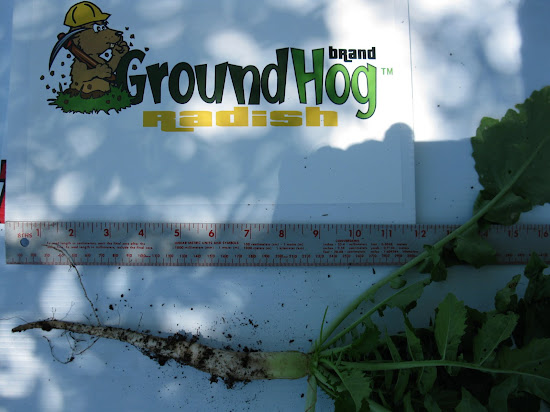
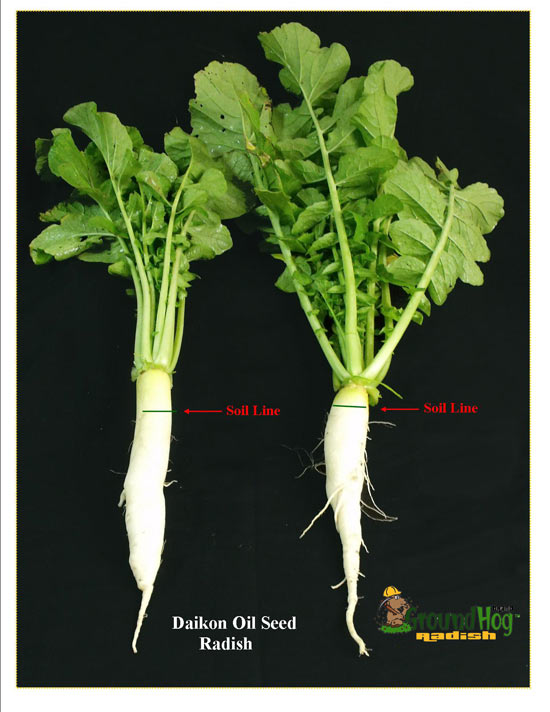 Notice the difference in the secondary roots. The GroundHog's superior secondary roots help to increase its overall effectiveness. Photo is courtesy of The Seed Center.
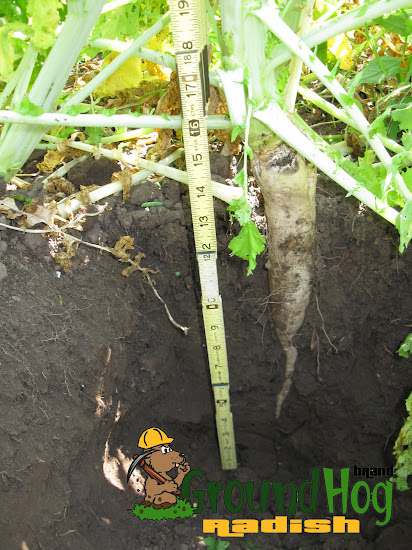
GroundHog™ Radish at 2 months old.
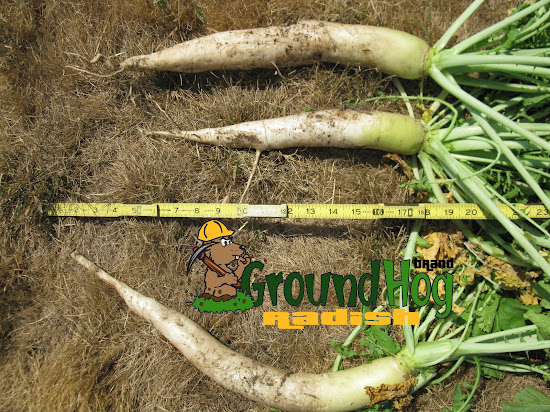
GroundHog™ Radish at 7 weeks old.
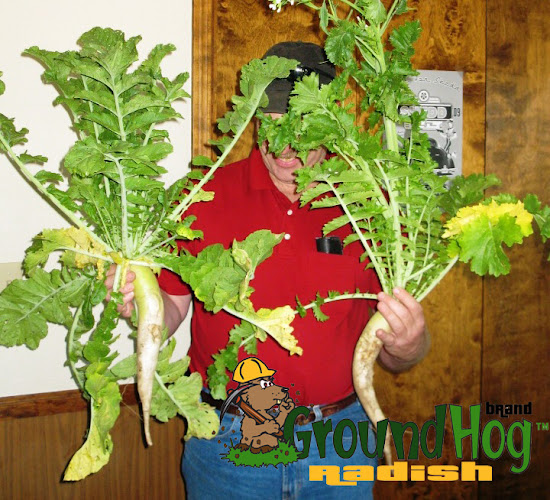
GroundHog™ Radish at 8 weeks old.
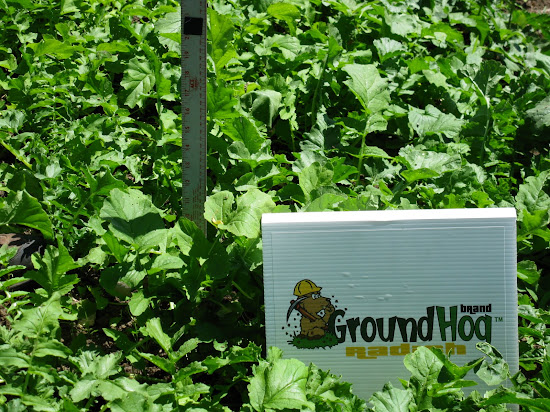
GroundHog™ only one month after planting! (Above and below.)
"Integrity and Excellence... Our Foundation, Your Guarantee!"
Ampac Seed Company - 32727 Hwy. 99E - PO Box 318 Tangent, OR 97389
Copyright© 2025 Ampac Seed. Worldwide Rights Reserved. Standard Terms & Conditions of Sale.